P700 / / What's On
Bitcoin whitepaper turns 18: what it says, explained in plain words
The Bitcoin whitepaper turns 18 on 31 October. What the nine pages actually say, in plain words, and how to mark the day in Vilnius.
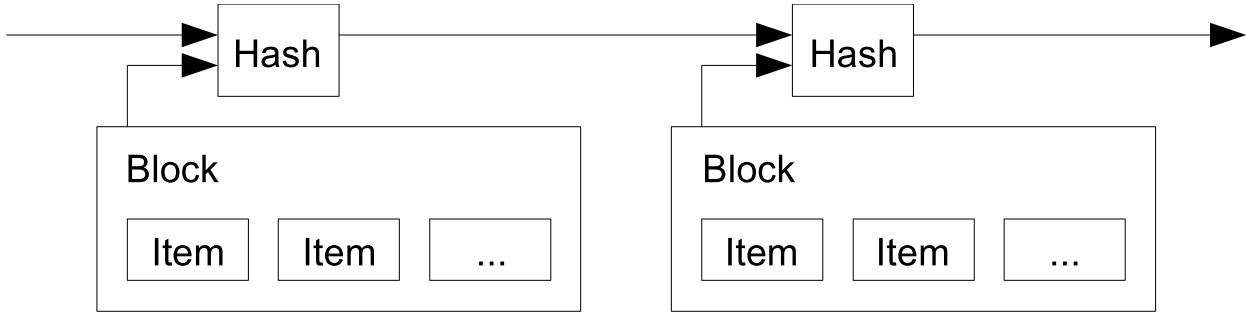
The Bitcoin whitepaper, "Bitcoin: A Peer-to-Peer Electronic Cash System", was published by Satoshi Nakamoto on 31 October 2008, when he sent a link to it to a cryptography mailing list. On Saturday 31 October 2026 it turns 18. The paper is nine pages long and still the clearest explanation of what Bitcoin is. Here it is in plain words, and how to mark the day in Vilnius.
Bitcoin whitepaper day: what happened on 31 October 2008
The announcement was short. Under the subject "Bitcoin P2P e-cash paper", Nakamoto wrote: "I've been working on a new electronic cash system that's fully peer-to-peer, with no trusted third party." It linked to the paper at bitcoin.org. The software and the first block came a little more than two months later, on 3 January 2009.
The Bitcoin whitepaper explained, section by section
The problem: double spending
Digital money is just data, and data can be copied. Banks and payment companies solve this by keeping the ledger themselves: they decide which payment came first. The paper's opening argument is that this works, but only if you trust the middleman, and it makes small, final, irreversible payments expensive.
The fix: a public timestamp
Instead of a bank, every payment is broadcast to everyone. Payments are grouped into blocks, and each block contains the hash of the one before it. That chain of hashes is a timestamp: change an old block and every block after it no longer fits. The diagram on this page is from the paper.
Proof-of-work: making the past expensive to rewrite
To add a block, a computer has to find a number that makes the block's hash meet a target, which takes a lot of attempts. Nodes accept the longest chain, the one with the most work behind it. To rewrite history, an attacker would have to redo that work faster than everyone else combined. The paper calls this "one-CPU-one-vote".
Incentives: why anyone runs it
The first transaction in each block creates new coins for whoever found it, and senders add fees. The paper argues that honest mining pays better than attacking: someone with that much computing power earns more by following the rules than by undermining the system their own coins depend on.
Light wallets and privacy
Section 8 describes "simplified payment verification": a phone wallet does not need the whole chain, only the block headers. Section 10 is about privacy: transactions are public, but the people behind the keys don't have to be, and a new key should be used for each payment.
What the paper did not predict
The word "blockchain" never appears in it. Neither do mining farms, exchanges or ETFs. And the "electronic cash" in the title turned out to be harder than the ledger: small everyday payments moved to the Lightning Network, a layer on top of Bitcoin that the paper did not describe. Reading the original is still worth twenty minutes, because it shows what problem Bitcoin was built to solve before everything else got piled on top.
How to mark it in Vilnius
- Read the paper. It is free at bitcoin.org/bitcoin.pdf, nine pages, readable without a maths degree if you skip section 11.
- Pay for something in bitcoin. The crypto bar at ZOLAK, Vytenio g. 50D, takes Lightning payments: see the menu at bar.zolak.lt.
- Host a reading. If your meetup wants a room for a whitepaper reading or a talk, ZOLAK hosts Bitcoin meetups and can be booked for the evening.
We have also written about running a Lightning node safely.
Not financial advice.