P700 / / Guides
Dziady in Belarus: the remembrance day and how to keep it in Vilnius
What Dziady is, how Belarusians keep it, why Kurapaty is part of it, and how to mark the day in Vilnius this autumn.
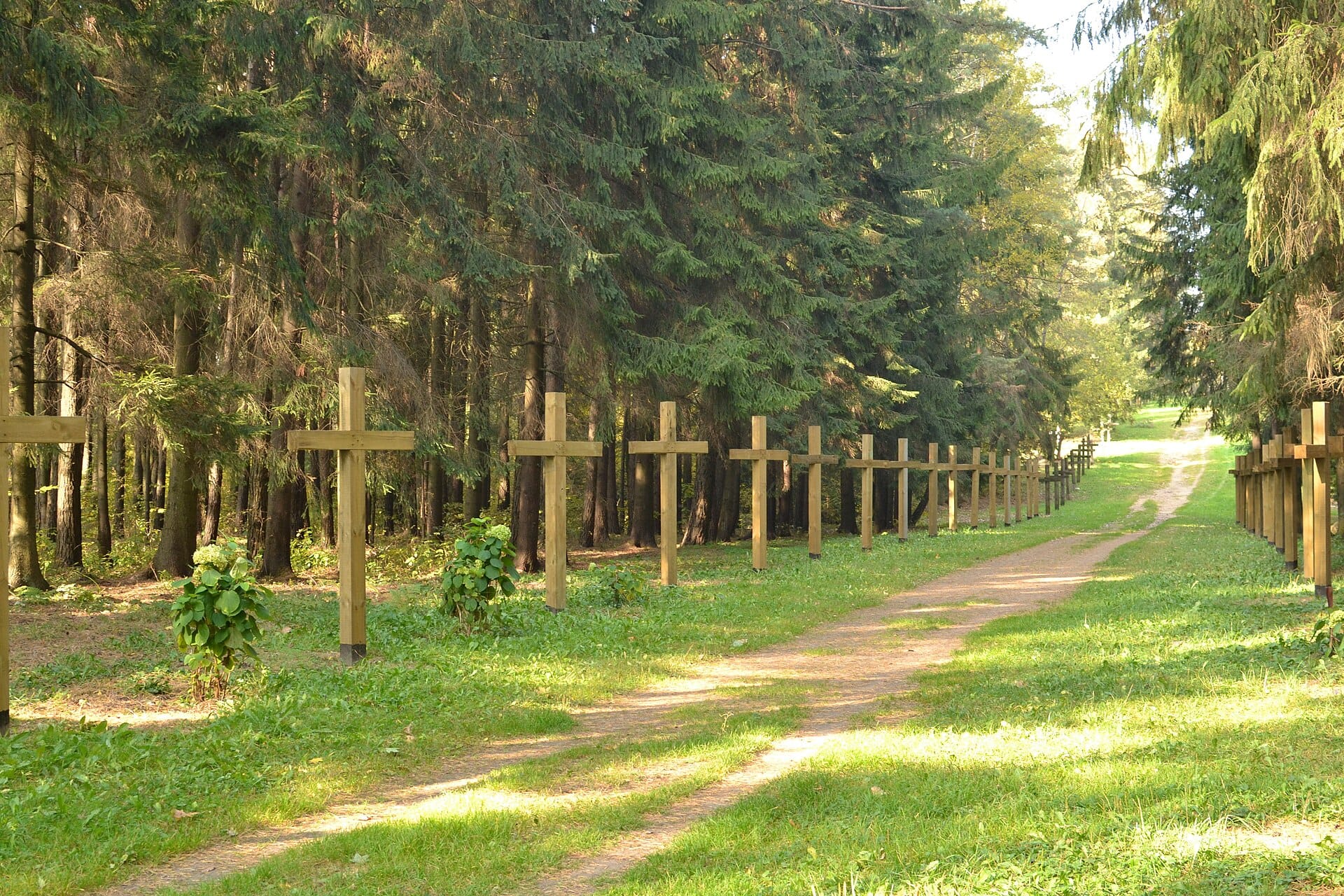
Dziady (Дзяды, "grandfathers") is the Belarusian tradition of remembering the dead: families visit graves, clean them, and hold a memorial dinner at home where a place is kept for the souls of their ancestors. The autumn Dziady falls at the turn of October and November, the same days when Lithuania marks Vėlinės. For Belarusians it also carries a political memory: the first mass march to Kurapaty, the site of Stalin-era executions near Minsk, took place on Dziady in 1988.
Here is what Dziady is, how it is marked, and how Belarusians in Vilnius can keep it this year.
What Dziady means in Belarus
The word means "grandfathers" and in Polish literature it is often translated as Forefathers' Eve. The custom is older than Christianity: twice a year, in spring and in autumn, people believed the souls of their ancestors came back to visit the living. The family's job was to welcome them, feed them and help them find peace, so that they in turn would look after the household.
Belarusian folk culture has several remembrance days through the year. The autumn Dziady, at the end of October or the start of November, is the best known and the one most people still keep. Different communities and churches mark it on slightly different days, so it is worth asking your own family when "our" Dziady is.
How Dziady is traditionally kept
- Visiting the graves. Families go to the cemetery a few days before, clean the graves, bring flowers and light candles.
- The memorial dinner. The core of Dziady is a meal at home. Typical dishes include kućcia (a sweet grain dish with honey), pancakes, bread, and hot dishes. Steam from hot food was believed to feed the visiting souls.
- A place for the ancestors. Many families leave a little food from every dish aside, set an extra plate or leave the table uncleared overnight.
- Quiet and memory. People speak about those who have died, tell their stories and name them. It is a calm evening, not a party.
Details differ from region to region and from family to family. There is no single "correct" Dziady: the point is remembering.
Dziady and Kurapaty: why the day is also political
In June 1988 the newspaper Litaratura i Mastactva published the article "Kurapaty: the Road of Death" by Zianon Pazniak and Jauhien Šmyhaloŭ, about mass graves of people shot by the NKVD in the 1930s in the forest near Minsk. On 30 October 1988, on Dziady, thousands of people marched to Kurapaty. The march, known as Dziady-88, was dispersed, but it became one of the first mass protests in Soviet Belarus, and the white-red-white flag was raised there.
Since then, for many Belarusians Dziady has meant two things at once: remembering their own grandparents and remembering the victims of repression. Under the Lukashenka regime, gatherings at Kurapaty are risky, and many of the people who would have gone there now live abroad.
How to mark Dziady in Vilnius
Vilnius is a good place to keep the tradition, because the city itself goes quiet at the same time. In Lithuania 1 November (All Saints' Day) and 2 November (Vėlinės, All Souls' Day) are public holidays, and the cemeteries are full of candles in the evening.
- Rasos cemetery. One of the oldest cemeteries in Vilnius and an important place for Belarusians too: Kastus Kalinoŭski and the other leaders of the 1863 uprising were reburied here in 2019, and Ivan Luckievič, one of the founders of the Belarusian national movement, is buried here. Bringing a candle is a simple way to mark the day.
- The cemeteries at night. On the evening of 1 November, walk through any Vilnius cemetery to see thousands of candles. It is one of the most beautiful sights in the city.
- A Dziady dinner with friends. If your family is far away, cook a simple memorial dinner with friends: kućcia, pancakes, something hot. Set a place, name the people you remember, and keep it quiet.
- Remembering political prisoners. Many Belarusians use Dziady to write letters to political prisoners or to support organisations that help them and their families.
A place to gather
Not everyone has a big enough kitchen for a memorial dinner, or family nearby. ZOLAK is a Belarusian-run art space in Vilnius with a full kitchen and room for a long table; you can find what is happening there and how to get in touch at zolak.lt.
FAQ
When is Dziady in 2026?
Autumn Dziady is kept at the end of October or the beginning of November. Families and churches mark it on slightly different days; in Vilnius it coincides with the Lithuanian Vėlinės on 1–2 November.
What does Dziady mean?
Dziady means "grandfathers" in Belarusian. It is the name of the days when the living remember and symbolically host the souls of their ancestors.
What is eaten on Dziady?
Typical dishes are kućcia (sweet grain with honey), pancakes, bread and hot dishes. Some of the food is set aside for the ancestors.
What happened at Kurapaty on Dziady 1988?
On 30 October 1988 thousands of people marched to Kurapaty near Minsk, where the NKVD shot people in the 1930s. The march was dispersed but became one of the first mass protests in Soviet Belarus.