P700 / / Guides
How to organize a DJ party: your first DJ night, step by step
Room, DJ, equipment, lights and a running order: how to organize a DJ party for 20 to 60 people, with a checklist for your first night.
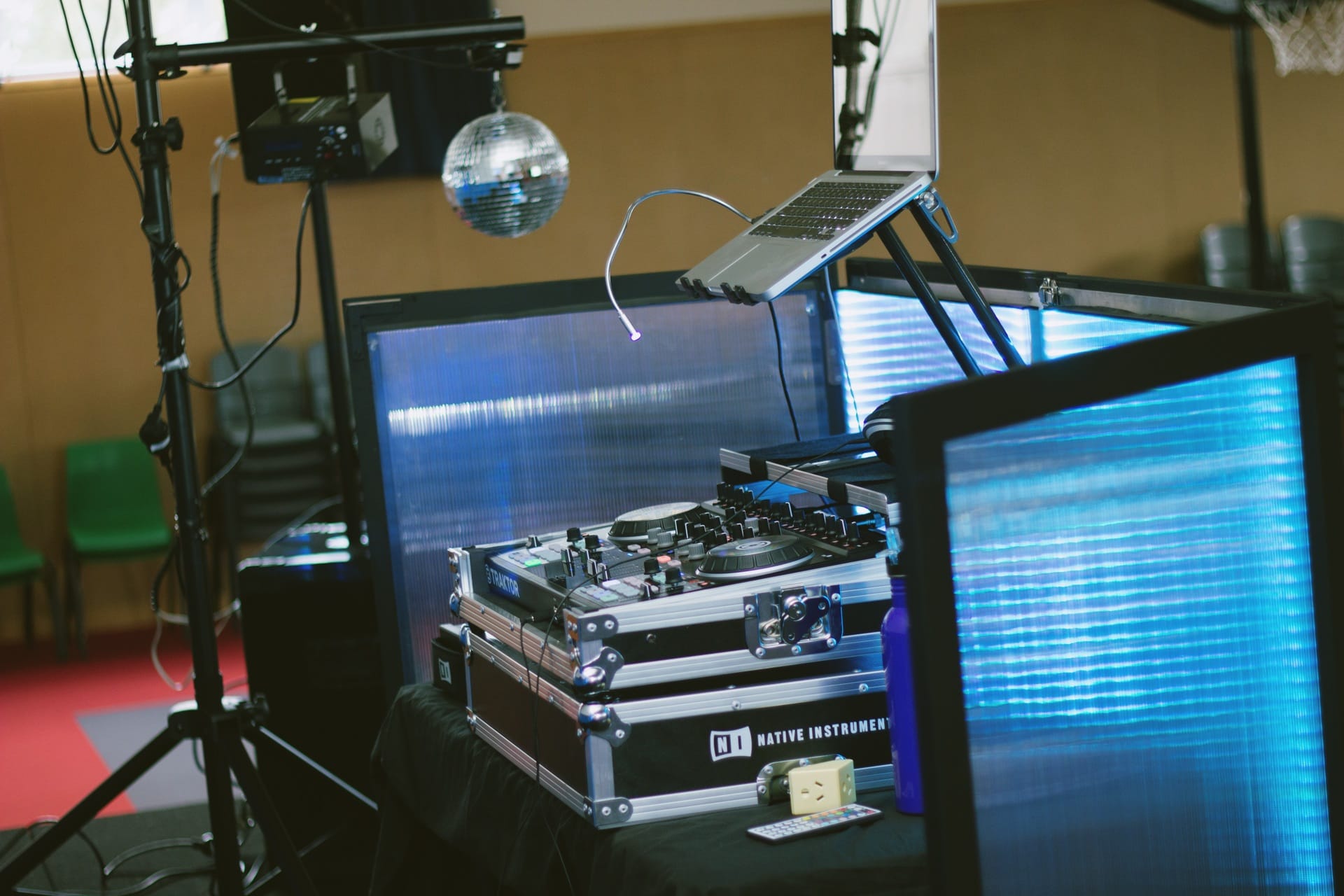
To organize a DJ party, you need five things sorted in this order: a date and a room that allows loud music late, a DJ (or a friend with a controller and a plan), a sound system the room can actually take, a lighting setup that makes people stop looking at their phones, and a running order that decides when the night peaks. Get those right and the guests do the rest. This guide walks through each one for a first DJ night of 20 to 60 people.
How to organize a DJ party: start with the room
Most first DJ nights fail on the venue, not the music. A living room tops out at a few dozen people standing, a restaurant will want the volume down at ten, and a bar will play its own music until your slot starts. Before you invite anyone, ask the place three questions:
- How loud, and until when? Get the real answer in writing: a quiet hour, a decibel limit, or neighbours who call the police.
- Is the sound system there, and who runs it? A PA with a mixing console saves you renting and carrying speakers.
- Is the whole place yours? Sharing the room with another group kills the dance floor fast.
We wrote a longer checklist on how to choose an event space in Vilnius; most of it applies here.
Finding the DJ
For a first night you have three routes. A friend who already plays: cheapest, but agree on a set length and a style in advance, or you get two hours of their favourite niche. A local DJ you book: ask for a recent recorded mix, not a promo photo, and listen to the first and last ten minutes. Or you play yourself: fine, as long as you have practised the transitions on the actual equipment, not just in headphones on the sofa.
Whoever plays, settle these before the night: start and end time, genre and tempo range, whether guests can request songs, who brings which equipment, and what happens if a cable or laptop dies.
What equipment you need to DJ a party
The minimum is shorter than people think:
- A controller or decks. A two-channel controller with a laptop is enough for almost any private party.
- A mixer input into the PA. Check the connectors on both sides the day before: XLR, jack or RCA. Bring adapters anyway.
- Main speakers and a sub. House parties without a sub sound thin the moment the room fills with bodies.
- Monitor or headphones. The DJ needs to hear the next track without the room hearing it.
- Power. A separate power strip for the DJ booth, away from the kitchen kettle and the fog machine.
- Backup music. A phone or USB stick with a two-hour playlist, plugged in and ready, for when the laptop freezes.
Do a sound check in the empty room, then remember that 40 people absorb a lot of sound: leave headroom on the master volume rather than starting at the limit.
Lights: the cheap part that changes everything
Turn off the ceiling lights. That single decision does more than any playlist. A few coloured washes, one moving effect and a bit of haze make a room feel like a dance floor instead of an office. Keep a dim light by the bar, the toilets and the exits so people don't trip, and agree who switches the full lights on at the end.
If the venue has DMX lighting, ask whether someone can set up a simple programme for you, or whether there are ready-made scenes. A laser looks great through haze; ask the venue first whether haze trips its smoke detectors.
The running order of a DJ night
A DJ party has a shape, and you plan it like one:
- Doors and warm-up (first hour). Lower volume, slower tempo, music people can talk over. Nobody dances to a peak-time track in an empty room.
- Build (second hour). The room fills, the tempo rises. If you have two DJs, the less experienced one plays here.
- Peak (one to two hours). The best-known tracks, the full lights show, the most people on the floor. Don't schedule speeches or cake in the middle of it.
- Come-down (last 30 to 45 minutes). Something people sing along to, then slower. End on a track, not on the music stopping mid-song when the clock runs out.
Two-hour DJ sets are a comfortable standard; one-hour slots keep things moving if several friends want to play. A whole night with one DJ is possible, but give them breaks and water.
Guests, door and the boring bits
Send the invitation with an end time, an address that works in a taxi app, and how to get in. Put one person on the door for the first hour: they greet, show coats and toilets, and stop strangers. Decide in advance who is sober enough to deal with a broken glass, a neighbour or a guest who has had too much.
If the party is public, with tickets or a door fee, the music becomes a public performance. In Lithuania, music rights are collected by LATGA for authors and AGATA for performers and producers; ask the venue whether its licence covers your night before you sell a ticket. A private party for invited friends is a different matter.
Plan the end too: when the music stops, when the lights go on, and who stays to pack the equipment. It is the least fun hour of the night and the one venues remember.
A simple checklist
- Venue booked, with volume and end time agreed
- DJ confirmed: set times, style, equipment list
- Connectors and adapters checked, backup playlist ready
- Sound check done in the empty room
- Ceiling lights off, safe lighting by exits and toilets
- Running order written down and shared
- Door person for the first hour
- Clean-up crew named before the party starts
Holding a DJ party at ZOLAK
ZOLAK is an event space at Vytenio g. 50D in Vilnius, in the former ELFA electronics factory, for up to 60 people. It has a professional audio system with a mixing console, DMX lighting with projectors and lasers, a kitchen and a sauna. A full-day booking gives you the whole venue to yourself; hourly bookings (day, evening or night) include the event space and all the equipment. You can book ZOLAK for your DJ party online; the floor plan and technical specs are on zolak.lt/plan. If it is a birthday, our post on birthday ideas for adults in Vilnius has more ideas.
FAQ
How do you throw a DJ party at home?
Clear one room as the dance floor, put the DJ in a corner facing it, borrow or rent a proper speaker with a sub, and turn off the ceiling lights. Warn the neighbours with an end time, and keep it to that.
What does a DJ do at a party?
A DJ reads the room and picks and blends the music so the energy builds and peaks at the right time. At private parties they often also handle announcements, the first dance or the birthday moment.
Do DJs bring their own equipment?
Usually they bring their controller or USB sticks and headphones, and expect the venue to have the PA and a mixer. Always confirm the exact list, connectors included, a few days before.
How long should a DJ set be?
Two hours is a common set length at parties; one hour works when several DJs share the night. The warm-up slot should be the gentlest one, whoever plays it.
What equipment do I need to DJ a party?
A two-channel controller and a laptop, a connection into a PA with a subwoofer, headphones and a backup playlist. Lights and haze are optional, but they make the biggest difference for the money.