P700 / / Belarus
Belarusian books in English: 12 to read, and where to start
Twelve Belarusian books you can read in English, from Alexievich and Karatkievich to Filipenko and Mort, and three to start with.
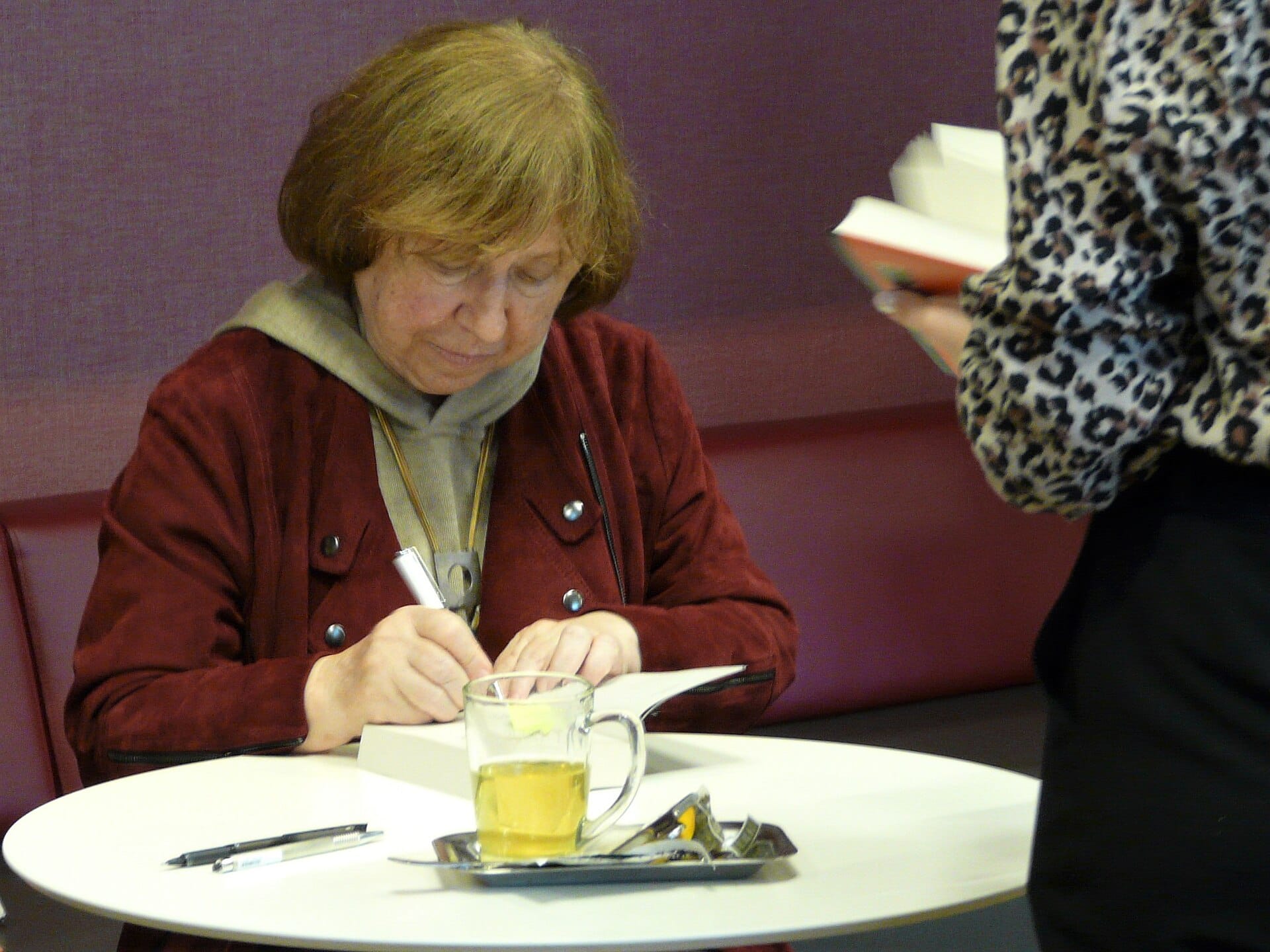
Belarusian books in English are easier to find than most people think. Start with Svetlana Alexievich (Nobel Prize, 2015), then Vasil Bykaŭ's war novels, Uladzimir Karatkievich's gothic classic, and the new wave: Sasha Filipenko, Alhierd Bacharevič, Valzhyna Mort and Volha Hapeyeva. Below are twelve titles that exist in English, who translated them, and where to start.
A note before the list. Belarus has two literary languages, Belarusian and Russian, and Belarusian writers use both. Alexievich and Filipenko write in Russian; Karatkievich, Bacharevič, Mort and Hapeyeva write in Belarusian. Both count. What makes a book Belarusian is where it comes from and what it is about, not the alphabet.
The Nobel one: Svetlana Alexievich
Alexievich won the Nobel Prize in Literature in 2015. Her books are oral histories: hundreds of interviews cut down to people speaking in their own words. They read like novels and hit harder.
- Secondhand Time: The Last of the Soviets (Random House, 2016, translated by Bela Shayevich). What the end of the USSR felt like to the people it happened to. The best single book for understanding why Belarus and Russia look the way they do.
- The Unwomanly Face of War (Random House, 2017). Women who fought in the Second World War. Start here if you have never read her.
- Last Witnesses (Random House, 2019, translated by Richard Pevear and Larissa Volokhonsky). The same war, remembered by people who were children then.
- Chernobyl Prayer (Penguin Modern Classics, 2016, translated by Anna Gunin and Arch Tait), also published earlier as Voices from Chernobyl (Dalkey Archive, 2005, translated by Keith Gessen). Belarus took most of the fallout. This is the book the HBO series leaned on.
Belarusian classics in English
Two names every Belarusian reader knows.
- Vasil Bykaŭ (1924–2003) wrote short, merciless novels about the war in the Belarusian forests: partisans, collaborators, and the choices nobody survives clean. In English look for The Ordeal (the novel known in the original as Sotnikaŭ), Wolf Pack and Sign of Misfortune. Most English versions were translated from the Russian editions.
- Uladzimir Karatkievich, King Stakh's Wild Hunt (translated by Mary Mintz, Glagoslav, 2012). A gothic mystery in a decaying manor in the Belarusian marshes of the 1880s, with a ghostly hunt riding at night. Belarusians read it at school and keep re-reading it. If you only take one classic, take this.
Contemporary Belarusian novels
- Sasha Filipenko, Red Crosses (Europa Editions, 2021, translated by Brian James Baer and Ellen Vayner). A 90-year-old woman losing her memory paints red crosses on the doors of her Minsk building to find her way home, and tells her young neighbour her life. Short, funny in places, and about what the Soviet state did to ordinary families.
- Alhierd Bacharevič, Alindarka's Children (Scotland Street Press, 2020; New Directions, 2022). A dark Hansel-and-Gretel in which children are "cured" of the Belarusian language. The translation is a stunt worth seeing: the Belarusian parts were put into Scots by Petra Reid, the Russian parts into English by Jim Dingley. His big novel, Dogs of Europe, is out in German but not yet in English.
- Viktor Martinovich, Paranoia (Northwestern University Press, 2013, translated by Diane Nemec Ignashev). A love story inside a surveillance state, banned in Belarus within days of coming out in 2009. With a foreword by Timothy Snyder.
Belarusian poetry
- Valzhyna Mort, Music for the Dead and Resurrected (Farrar, Straus and Giroux, 2020). Family, history and Belarusian silence about it. It won the international Griffin Poetry Prize in 2021. Her earlier Factory of Tears (Copper Canyon, 2008) is a good second step.
- Volha Hapeyeva, In My Garden of Mutants (Arc Publications, 2021, translated by Annie Rutherford). Sharp, strange poems about language, bodies and the absurd; the translation won an English PEN Translates award.
Where to start, in three books
- For understanding the country: Secondhand Time.
- For a story you won't put down: King Stakh's Wild Hunt.
- For Belarus now, in under 300 pages: Red Crosses.
Then read the war through Bykaŭ, and finish with Mort's poems. That is a decent first year of Belarusian literature.
Belarusian books in Vilnius this week
Vilnius has been a home for Belarusian writing for a long time, and it still is. Two Belarusian book evenings are on at ZOLAK, Vytenio g. 50D, this week, both free:
- Saturday 31 October, 14:30: Michail Volchak presents his book about communities, Sacyjatechnika. Pačatki, followed by a talk on how small initiatives can work together. In Belarusian.
- Sunday 1 November, 19:30: an evening for Viachka Krasulin's book Praź ništo ŭ nikudy, with an acoustic set by Kashlaty BOX and a special guest, Uladzislau Navazhylau (Lesley Knife) of Gods Tower.
Details from the organisers on zolak.lt. The second evening falls on Dziady, the Belarusian day of remembrance; we wrote about it in Dziady in Belarus and how to keep it in Vilnius. Several of the writers above have been forced out of Belarus, and many readers are still behind bars there: here is how to help political prisoners.
FAQ
What are the best Belarusian books in English?
Secondhand Time by Svetlana Alexievich, King Stakh's Wild Hunt by Uladzimir Karatkievich, Red Crosses by Sasha Filipenko, The Ordeal by Vasil Bykaŭ and Music for the Dead and Resurrected by Valzhyna Mort are a solid start.
Which Belarusian writer won the Nobel Prize in Literature?
Svetlana Alexievich, in 2015. She writes in Russian, in a genre of her own: oral histories built from hundreds of interviews.
Who are the famous Belarusian writers?
Classics include Yanka Kupala, Yakub Kolas, Maksim Bahdanovič, Vasil Bykaŭ and Uladzimir Karatkievich. Among living writers, Svetlana Alexievich, Alhierd Bacharevič, Sasha Filipenko, Valzhyna Mort and Volha Hapeyeva are the most translated.
Is Belarusian literature written in Belarusian or Russian?
Both. Karatkievich, Bykaŭ (in the original), Bacharevič, Mort and Hapeyeva write in Belarusian; Alexievich and Filipenko mostly in Russian.